Tom Wolfe argued that late 20th century art had become so dominated by art theory that it was now less a visual medium than a literary one: "The paintings and other works exist only to illustrate the text," he claimed. Iv noticed this myself comparing different art movements.
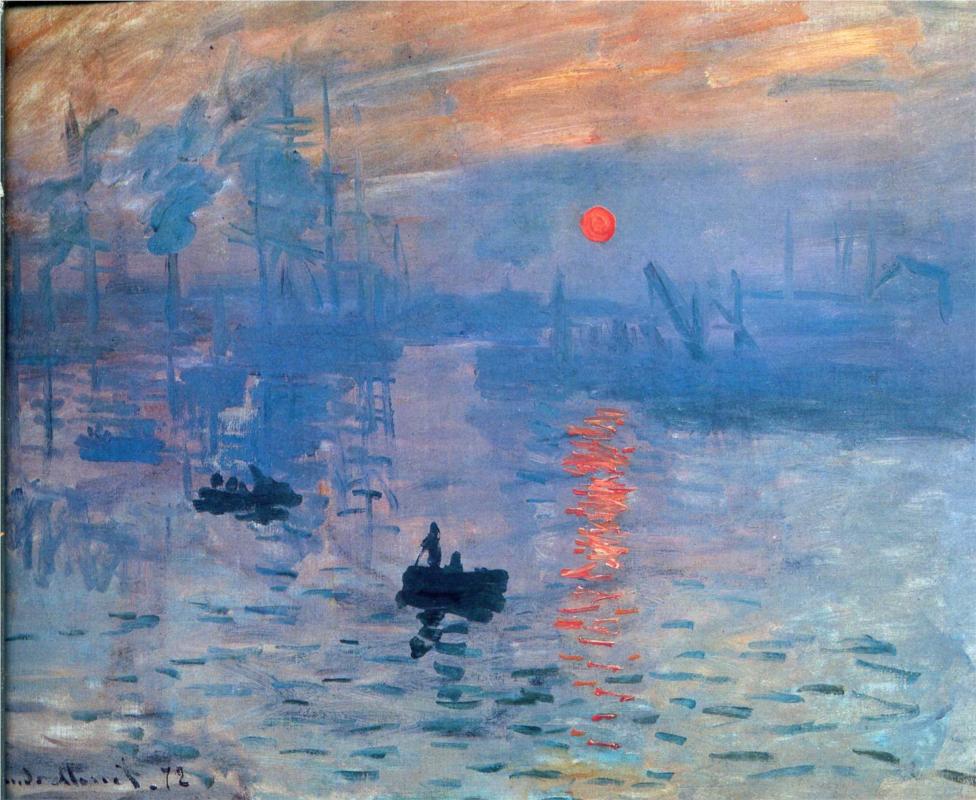
Art movements have changed through the decades. 1867-1923 the Impressionism movement, Claude Monet was a french artist and a leading member of the Impressionist group of the painters. 1872 he visited Le Havre where he painted 'An Impression, Sunrise', which was exhibited in 1874, part of the title was used derisively by a critic to label the whole movement. This exhibition is now known as the First Impressionist Exhibition.
“Painting does not have to be ‘literary’– an invective which many people use in regard to paintings that do not depict apples on a tablecloth or a broken violin.” –Edvard Munch, 1929
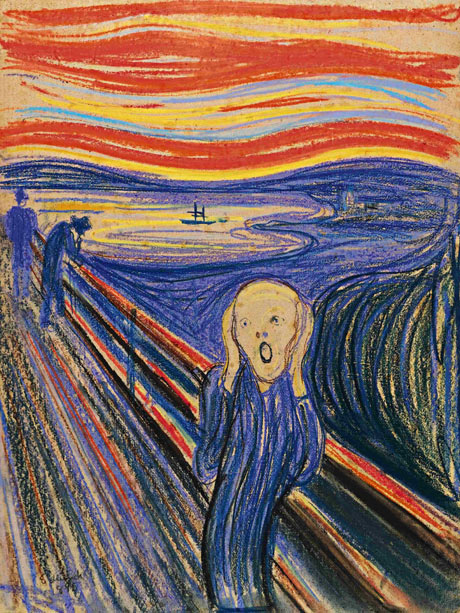
1890-1926 The Modern art movement was in full swing. Edvard Munch, a Norwegian painter and printmaker was greatly influenced by German Expressionism and created works themed intensely on psychological treatment. His work has become symbolic of the human condition and doesn't suppress emotion both conscious and unconscious. his perplexing, enigmatic work was a product of his troubled life, of which he grew up around sickness, madness and death. By his middle age he became an alcoholic, after a breakdown his genius of art progressed him through his life. Edvard describes madness and death like black angels that kept watch over his cradle, this has had a lasting effect throughout his life that is greatly reflected in his work. 'The Scream' one of the most famous and iconic pieces in art. There are four copies of The Scream, only one of these copies is privately owned, the other three belong to museums and galleries, however the privately owned copy differs from the rest by the poem that's inscribed into the original frame. this poem relates to a diary entry from which the poem originated, Munch refined his entry in small but important ways before placing it under the artwork. The scream is truly surreal and best represents the mind of a mentally ill person.
I was walking along the road with two friendsThe Sun was setting – the Sky turned blood-red.And I felt a wave of Sadness – I pausedtired to Death – Above the blue-blackFjord and City Blood and Flaming tongues hoveredMy friends walked on – I stayedbehind – quaking with Angst – Ifelt the great Scream in Nature
Surrealism began in France 1924. Sigmund Freud wrote a book called 'The Interpretation of Dreams' where he describes the 'Unconscious mind' as a deep layer of the human mind where memory and instincts are stored. This book is what inspired the poet Andre Breton to publish a manifest proposing his theory that art and literature could represent the unconscious mind. it is here at the low level of the mind where ideas have been plucked by artists through the many layers of the mind and onto the canvas.
Artists who agreed with Andre Breton's idea range from Salvador Dali to Max Ernst.
Freud believed the primary motivation for life was sex, he later changed his mind despite the fact that sex is a instinctive and vital process for human reproduction. Breton believed; love, poetry and liberty were the keys to understanding human beings.
"In love with the shape and sounds of words" Dylan Thomas
There are two main types of surrealist painting, on one side there are dreams describing the subconscious mind and on the other side there is 'automatism' that expresses the unconscious mind, there is a fundamental difference between the subconscious and unconscious mind.
In psychology, “automatism” refers to involuntary actions and processes not under the control of the conscious mind—for example, dreaming, breathing, or a nervous tic. Automatism plays a role in Surrealists techniques such as spontaneous or automatic writing, painting, and drawing.
 Dreams have a rich source of creativity, colours and moods.
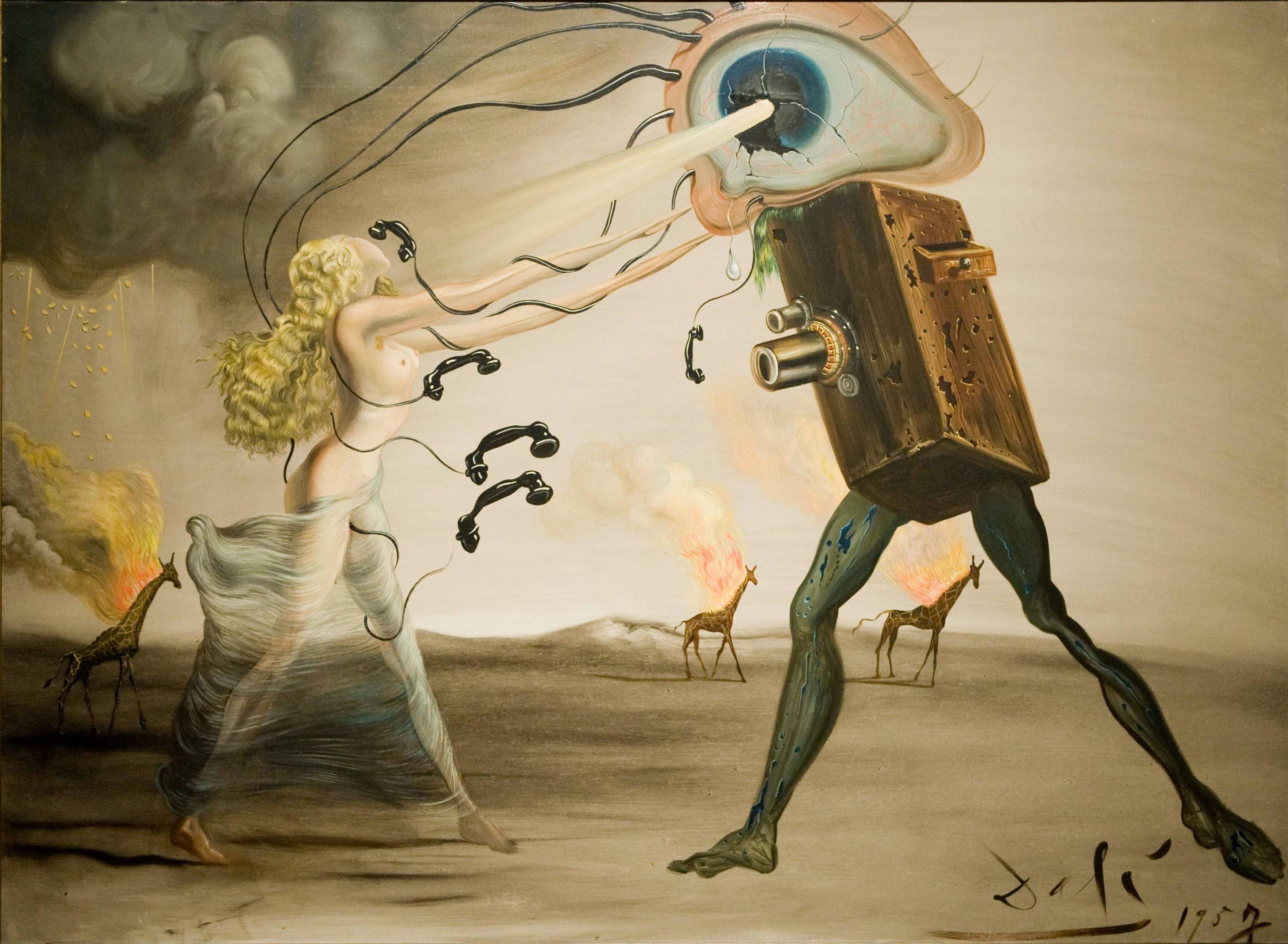
Salvador Domingo Felipe Jacinto Dalí i Domènech, a prominent Spanish surrealist is probably the most iconic and famous artist in the Surrealism movement. At first glance at Dali's work there is an unusual feeling of emptiness, and at the center is a wild and wierd set of objects, often distort and disturbing. Its these finer details I love in Dali's work, and how each element is so perfectly placed to symbolize something, these symbols may mean something different depending on how you view the piece, or even your mood at the time.
Artists who agreed with Andre Breton's idea range from Salvador Dali to Max Ernst.
Freud believed the primary motivation for life was sex, he later changed his mind despite the fact that sex is a instinctive and vital process for human reproduction. Breton believed; love, poetry and liberty were the keys to understanding human beings.
"In love with the shape and sounds of words" Dylan Thomas
There are two main types of surrealist painting, on one side there are dreams describing the subconscious mind and on the other side there is 'automatism' that expresses the unconscious mind, there is a fundamental difference between the subconscious and unconscious mind.
In psychology, “automatism” refers to involuntary actions and processes not under the control of the conscious mind—for example, dreaming, breathing, or a nervous tic. Automatism plays a role in Surrealists techniques such as spontaneous or automatic writing, painting, and drawing.
Salvador Domingo Felipe Jacinto Dalí i Domènech, a prominent Spanish surrealist is probably the most iconic and famous artist in the Surrealism movement. At first glance at Dali's work there is an unusual feeling of emptiness, and at the center is a wild and wierd set of objects, often distort and disturbing. Its these finer details I love in Dali's work, and how each element is so perfectly placed to symbolize something, these symbols may mean something different depending on how you view the piece, or even your mood at the time.

No comments:
Post a Comment