'For the forth time in as many years, they were confronted with the problem of what birthday present to take to a young man who was incurably deranged in his mind. Desires he had none. man-made objects were to him hives of evil, vibrant with malignant activity that he alone could perceive, or gross comforts for which no use could be found in his abstract world. After eliminating a number of articles that might offend him or frighten him (anything in the gadget line, for instance, was taboo), his parents chose a dainty and innocent trifle- a basket with ten different fruit jellies in ten little are.'
The unfortunate event of every year, causing Marcus to be one of the most awkward friends to have. ever. With the party in full swing there was turning back on the choice of present I had decided to get Marcus. This was by far a decision that took extremely longer than what it should have. As his close friend I felt in full responsibility if i at all were to ruin his birthday with an offending gift.
Tall willow trees fenced the bottom of the large garden. Swaying in the cool summer breeze. Flower beds from the willow trees followed all the way up to the back of the house, filled with blooming summer flowers, giving of the sweetest of scents and attracting all kinds of wonderful butterflies and other flying insects. The sun glistened down full beam over us, and water fights had never been so better on days like these. A wobbly blown up pond looking paddling pool had been placed carefully on the concrete slabs near the french doors to the back of the house.
It was so good to see him smiling for once, although he was just sat there like usual keeping himself to himself. The enormous garden had been done up and to Marcus's standards. A large round table placed in the middle of the garden stood tall in the luscious green grass that surrounded us, filled with fresh organic foods placed on white pater plates, glass bowls of colourful exotic fruits and plenty of other delicious treats to snack on as the day went by.
As the time flew by with various party games happening, it was time for Marcus to open his presents. One by one he opened them. Nerves hit me hard, sweat glistened on my forehead, my palms became sweaty and the sun suddenly felt as if it was cooking me in the oven. Panic rushed through me as he picked up my present, Marcus paused with the present in front of him, looked over at me and smiled, I forced a hard quick smile back. Marcus looked down and pulled off the lid to the boxed present.
To my surprise a tear ran down the check of my friend and a huge smile grew back on his face, reaching ear to ear. he got up, walked over to me snd wrapped his arms around my shoulders. I wrapped my arms around his waist and hugged tightly back. 'Thank you' Marcus whispered.
Monday, 2 March 2015

Paris Trip
 Five days in Paris was bliss. Lots to see in the city centre and a lot of attention to detail, culture, and art. Was very enjoyable and a great experience. Would love to visit again.


Dadaism
A European artistic movement during the certain 20th-century. Writers and painters from France, Germany, and Switzerland who were strongly against World War I, and the conservativism of traditional thought. This bold and anti-art movement is a reflection of what was happening in the world through the eyes of these artists.
Dada artists rejected mass media and propaganda, the first exhibition of Dada was in 1917 however by 1919 most of the artists had moved to other countries taking their art with them.

Dada artists rejected mass media and propaganda, the first exhibition of Dada was in 1917 however by 1919 most of the artists had moved to other countries taking their art with them.
1920, The International Dada fair was shocking for exposing the slander against the German military through the works of art. following this fair the Dada scene was quite until Marcel Duchamp created or found a porcelain urinal, which was signed "R.Mutt" and titled Fountain. This original piece was rejected by the committee and instead was photographed and displayed at Alfred Stieglitz's studio. The idea behind this art piece is specific, 'Art is something you piss on'.

Abstract expressionism
The most symbolic of America's art movements developed in New York 1940s, following World War II. The term 'abstract expressionism' was first used in the German magazine 'Der Sturm' to help describe German Expressionism art pieces. Originally the name was derived from a combination of self-denial and emotional intensity from German Expressionists.
Anarchy, Rebellious and highly indiosyncratic. The basis to the Abstract expressionism style was influenced by surrealism, borrowing the idea of unconscious, relating to self and personal beliefs. Cubism was another major influence, strange shapes and extractions to convey emotion and movement. This is important because the not alot of the paintings had a specific product, it was abstract.
Abstract expressionism was split into two groups; one called action painters, led by Jackson Pollock and Willem De Kooning, large and wild brush strokes and seemingly chaotic pieces, and the other called the Colour-field painters formed by Mark Rothko, Barnett Newman and Clyfford Still, more of a smoother feel with use of focus colour and shapes.
The painting below (Autumn Rhythm by Jackson Pollock) is a action piece, you can tell because it doesn't have a centre, the whole painting is the subject, the wild movement used to create it give an empression of how Jackson Pollocks was feeling at the time.

Jackson Pollocks or 'Jack the dripper', a major figure in the abstract expressionist movement was greatly influenced by the work of Andre Masson and Max Ernst. Dripping paint onto a canvas, a wild and expressive style that was unique to him found him in considerable fame and notoriety. I think Jackson's long term use of excessive drinking had released his thoughts and feelings, then channeled into his art. Unfortunately it was his trouble with alcohol that caused his death at the age of 44.
Anarchy, Rebellious and highly indiosyncratic. The basis to the Abstract expressionism style was influenced by surrealism, borrowing the idea of unconscious, relating to self and personal beliefs. Cubism was another major influence, strange shapes and extractions to convey emotion and movement. This is important because the not alot of the paintings had a specific product, it was abstract.
Abstract expressionism was split into two groups; one called action painters, led by Jackson Pollock and Willem De Kooning, large and wild brush strokes and seemingly chaotic pieces, and the other called the Colour-field painters formed by Mark Rothko, Barnett Newman and Clyfford Still, more of a smoother feel with use of focus colour and shapes.
The painting below (Autumn Rhythm by Jackson Pollock) is a action piece, you can tell because it doesn't have a centre, the whole painting is the subject, the wild movement used to create it give an empression of how Jackson Pollocks was feeling at the time.

The McCarthy era; a time shortly after WWII where art was greatly suppressed in the United States. Many unfair investigative techniques were used against the American public, accusing people of being communists or communist sympathizers. Artists of this period were particularly targeted due to the expression of views through art, however if the art was totally abstract then it would be safe for viewing, only insiders would know the true meaning or message.
Mark Rothko, a Russian painter largely known for his colour field pieces, and use of coloured rectangles. looking at Marks artwork it doesnt seem to take you anywhere, there are no obvious stories behind them, unlike most other abstract expressionist painters. This was because he was a well known artist and didn't want the movement message tainted with. He thought people would just look at his art due to its popularity, not the experience hes intending.

Colour important to express emotion and I think Mark Rothko has used this well, he would walk up to a canvas with an feeling, this feeling is what he tries to show through the painting. The palette is so precise that just changing one of the colours could completely flip the feeling that's being suggested. The rough edges speak to me in a way that his emotions aren't perfect or well presented, they are sketchy and human.
Public reaction; critics went wild over this, they got upset because they couldn't find a meaning or purpose. The skill level required is minimal, critics called this dumb and childish. Iv noticed that most critics say this throughout other movements.
On the positive side, America felt proud, they could compete with the rest of the world and show they could do just as-well as Paris. Abstract expressionism became a mainstream movement, alot of people knew about it and were influenced by it.
Clement Greenberg respected the movement and the flatness of the canvas. He liked how they weren't trying to put 3D objects onto a 2D canvas.
Pop-art was influenced by Abstract expressionism, although Pop-art didn't have the same focus, it was less todo with the unconscious. Abstract expressionism paved the way for American art and lifted limitations and expectations that would normally limit people to producing their own pieces.
Sunday, 1 March 2015
Eadweard Muybridge
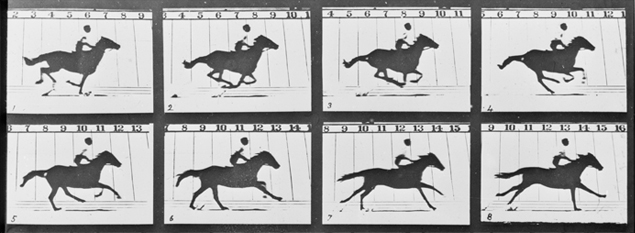
Eeadweard Muybridge, British born photographer who moved to the United States in 1850 he then later returned in 1861, known as one of the most influential photographers of all time. Most famous for capturing animals and humans in motion, using at the time the latest photographic technology.
Eadweard was talented in many areas of photography including, landscape, academic, scientific and was the first cinematography.
His most productive period was in 1880, where he attended the University of Pennsylvania, creating over 100,000 images, the majority of his work.

Eadweard was talented in many areas of photography including, landscape, academic, scientific and was the first cinematography.
His most productive period was in 1880, where he attended the University of Pennsylvania, creating over 100,000 images, the majority of his work.
“I am going to make a name for myself. If I fail, you will never hear of me again.” -- Edward Muggeridge
Pablo Picasso
Pablo Picasso was known for many reasons, the women, the fame, even the money but that is not really, why he is important though. He is more important for the fantastic and breathing art he created and made over his seven decade art career period that literally transformed the 20th century.
 Sex; All the way through Picasso's work you can see the influences women had over him. Picasso had many repetitive painting of countless lovers of his, their naked bodies and facial portraits, showing his passionate love affair within his works. Picasso created more works of art based on his second wife Jacqueline Roque than any of his other lovers, in one year he painted over 70 portraits of her. I think the best example to look at would be images of Marie Therese Walter. He created many painted images of Marie like her sleeping in a striped chair and a pastel and charcoal drawing on canvas of Marie seemingly grasping a younger version of herself.
Magic; There's a point in Picasso's work where he discovers something new and it completely changes the way he looks at an object, face or body. You can notice these African-influences in Les Demoiselles d'Avignon and the change of the natural face to a mask like face of the women. This is when he met Gertrude Stain and her brother Leo. It was because of the Steins, Picasso's work reflected the studies of African, Iberian and Roman masks. This paved the way for cubism, something Picasso developed and even collaborated with Georges Braque. The magic of what the two had created is remarkable and at the time rattled some sort of motivation that radically spread to all places around the world.
 Death; Picasso was formed by a journey through Spain, by the death of his younger sister and the suicide of his friend Carlos Casagemas. This caused his blue period. Funny to think during the middle ages blue was represented as a royal and powerful colour and at the time it was the only colour Picasso could afford. From this several paintings of the deceased were created. Guernica, Picasso was seemingly portraying the bombing of a basque village during the Spanish civil war. He took imagery of his own private life and he transferred that into a town under bombardment and this combination of the personal and the political made the most powerful political painting of the 20th century.
Sex; All the way through Picasso's work you can see the influences women had over him. Picasso had many repetitive painting of countless lovers of his, their naked bodies and facial portraits, showing his passionate love affair within his works. Picasso created more works of art based on his second wife Jacqueline Roque than any of his other lovers, in one year he painted over 70 portraits of her. I think the best example to look at would be images of Marie Therese Walter. He created many painted images of Marie like her sleeping in a striped chair and a pastel and charcoal drawing on canvas of Marie seemingly grasping a younger version of herself.Magic; There's a point in Picasso's work where he discovers something new and it completely changes the way he looks at an object, face or body. You can notice these African-influences in Les Demoiselles d'Avignon and the change of the natural face to a mask like face of the women. This is when he met Gertrude Stain and her brother Leo. It was because of the Steins, Picasso's work reflected the studies of African, Iberian and Roman masks. This paved the way for cubism, something Picasso developed and even collaborated with Georges Braque. The magic of what the two had created is remarkable and at the time rattled some sort of motivation that radically spread to all places around the world.
Lace
Lace in early english text refers to 'ties', patterned openwork fabric with open holes. Orinially linen, silk, silver or gold threads were used, nowadays lace is often made from cotton. Few modern artists make lace from fine copper or silver instead of thread. Removing threads or cloth from the woven fabric creates open spaces that make a lace fabric. The thread is looped, twisted or braided to other threads from a backing fabric, lace wasn't made like this until the late 15th and early 16th centuries.
Needle lace, cutwork, bobbin lace, tape lace, these are just a few of the many types of lace, each created using different techniques, a needle and single thread (needle lace) or with multiple threads (bobbin lace).
Lace became dominant in both fashion and home decor, enhanced beauty of collars and cuffs. Originally lace was used by clergy of the early Catholic Church as part of vestments in religous ceremonies, up until the 16th century this was its primary use, however the popularity of lace increased swiftly throughout Europe. St. John Francis Regis inspired girls from the country to stay away from the cities by teaching them in the lace making and embroidery trade.
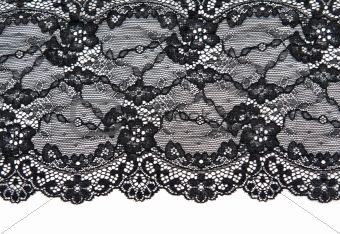
Fashion was the main driving force behind lace production. We know lace now as a delicate looking material, with very fine details and patterns, often used for its slightly see through effect to glimpse the skin underneath it. Lingerie and lace, a sexy combination that's not quite revealing but attractive. The use of the open spaces in the lace allows the skin to be part of the fashion garnet.
Design and Play Instinct
Its all about experimentation, without it, everything would be dull. Once learning to play with mark making and creative chaos, it never leaves you. I feel as thought I am already finding my feet and starting to understand the involvement of design and art history. You use all elements to your advantage and thrive of the enjoyment and understanding. You aim to work towards a focus and try to balance all your mix and match pieces of work together to generate an exciting outcome.
This unit has been fabulous for me, its exactly the way I like working. Along the way I've learnt principles I can apply to my work and harvest more of a skilled way come to a less narrowed minded ending. Being constantly engaged with your work is key and this unit did that for me. Different is good and its better not to do the predicable and same ideas as always. When you have the freedom to be imaginative and excited about a project it makes you a lot more focused and driven to make it what you imagine. I have discovered a lot of new ways of working and I am anticipating the start of the next project with excitement.
This unit has been fabulous for me, its exactly the way I like working. Along the way I've learnt principles I can apply to my work and harvest more of a skilled way come to a less narrowed minded ending. Being constantly engaged with your work is key and this unit did that for me. Different is good and its better not to do the predicable and same ideas as always. When you have the freedom to be imaginative and excited about a project it makes you a lot more focused and driven to make it what you imagine. I have discovered a lot of new ways of working and I am anticipating the start of the next project with excitement.
Subscribe to:
Posts (Atom)